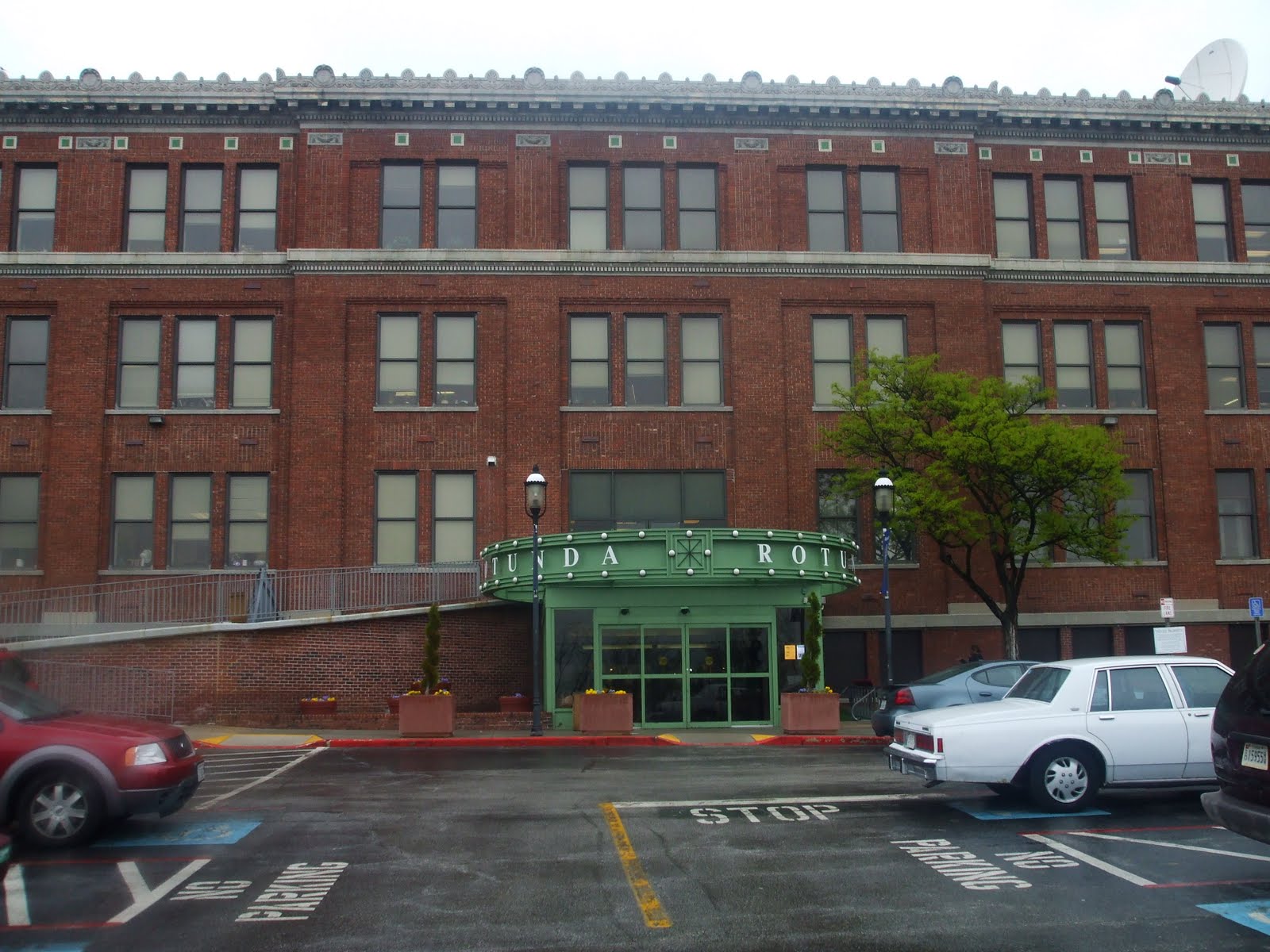
The remains of the old Clipper Mill has quickly become Baltimore's most sought after and most hidden address at the same time. The reason being is that Clipper Mill has gotten back to its roots as a Mill Village with a mix of uses including residential, retail, and office space. Given the success of Clipper Mill, one can't help but wonder if other old Mills in the Hampden Woodberry Area should have been better preserved or if there are other undiscovered Mill remains in the Woodberry Outback.
Clipper Mill came into existence around the Civil War as people from the South and Appalachia flooded Baltimore looking for work. Clipper Mill, which specialized in melting iron and producing machines and the Mount Vernon Cotton Mill. The site of the Mount Vernon Cotton Mill is now the Pepsi Bottling Plant opposite Clipper Mill. These Mills (twelve total) could not house the thounsands of workers who migrated to Baltimore. Thus began the early building boom of Hampden-Woodberry. Most of the detached housing built at the time was spread out and can be found mostly in Woodberry with a few amongst the Hampden Row Homes.
 After the Civil War, Clipper Mill and its industrious Neighbors did not see a reduction in numbers of workers migrating from the South and Appalachia nor did those who came Pre-Civil War, leave. This explains the Southern Appalachian twang of the Baltimore Accent and why it's still so prevalent in Hampden today. Although work in the Mills slowed a little bit after the Civil War there was plenty to go around, in fact a second Migration Boom occurred during the United State's entry into World War I. Like clockwork, when the second Migration Boom Occurred, so did another Building Boom. This time, the new housing was denser Row Homes in what is present day Hampden and Medfield Heights. The current lay out of these Neighborhoods hasn't changed much since their inception during World War I.
  Unlike the Civil War, Clipper Mill did not keep the jobs that were added for World War I. However, the Roaring 20s kept the Machines of Clipper Mill running. The Great Depression, for a short time brought Clipper Mill to a screeching halt. During the 1930s unemployment sky rocketed but by the mid to late 1930s Clipper Mill geared up and staffed up for World War II. World War II provided a brief healthy period for Clipper Mill and its cohort. Once World War II ended the 1950s and 60s spelled the end of Clipper Mill and Hampden Woodberry as we know it.
 The Mount Vernon Cotton Mill was redeveloped as a Pepsi Bottling Center and the JFX (I-83) separated Clipper Mill and Woodberry from Hampden. Since Hampden Woodberry's employment base came from the Mills that had closed they went into rapid decline. Clipper Mill was left to rot, but was that a bad thing?
 I should say not! For several reasons, one Batimore has a tendency to demolish way too many of its buildings, two preservationists have a hard time finding buildings to restore in Baltimore, and three Clipper Mill, except for a small fire in the 1960s has remained unchanged since its heyday. In the early 2000s, when Hampden's resurgence had been in full force for several years, developer Struever Brothers, Eccles and Rouse (SBER) saw Clipper Mill and saw a vision and they took that vision across the JFX and the Woodberry Light Rail Station.
  Now SBER isn't some fly by night developer or some national conglomerate who only knows "Baltimore's Harbor", SBER has a huge stake planted in Baltimore's Future and they know a good investment when they see one and they saw one; in Clipper Mill. Clipper Mill has seen a rebirth a mixed use development as Condos, Town Homes, Single Family Homes, Offices, and a small Retail Component. The old Mill has been restored to her former glory and a new Village has grown up around it. If I were a developer I'd be wishing that more of the Mills of the Old Hampden Woodberry had been preserved given the success of Clipper Mill and the general ugliness of the Industry along the JFX. Meadow Mill, a small textiles plant east of the JFX was converted into a large Gym. If I could turn back time, I'd turn the Mount Vernon Cotton Mill into a development similar to Clipper Mill, perhaps with a larger Retail Component. If Pepsi were to relocate its bottling plant it could be redeveloped as such. As for Clipper Mill, I can say with certainty that's Preservation at its Best.